
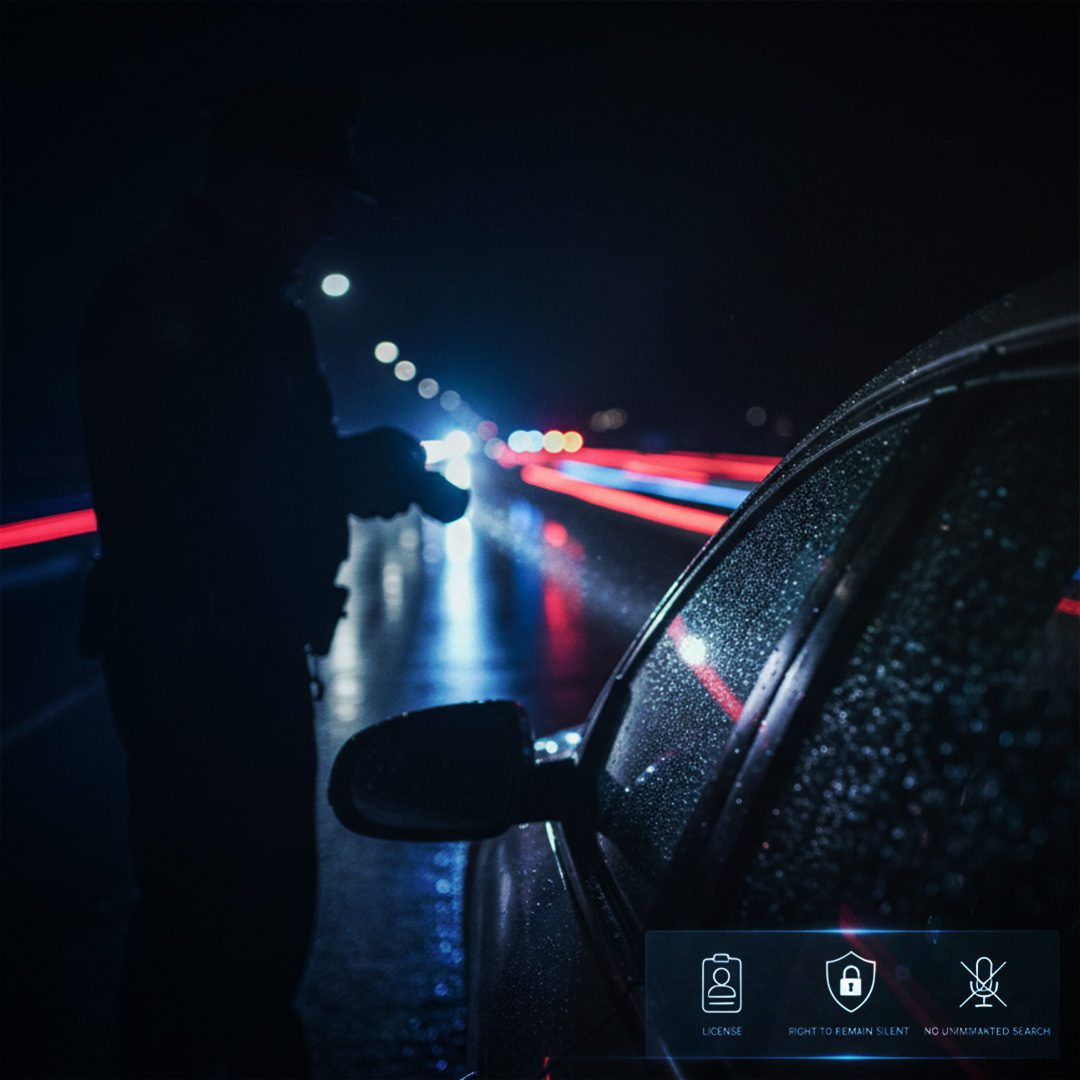
Being pulled over by police can be stressful, even if you have done nothing wrong. Many drivers are unsure of their rights, what they must do, and what they should avoid saying during a roadside stop. Understanding how traffic stops work in Alberta can help you protect yourself and avoid unintentionally making the situation worse.
In Canada, police have broad authority to stop vehicles. The Supreme Court of Canada confirmed in R v Ladouceur (1990) that police may randomly stop drivers to check licensing, registration, insurance, and sobriety. This means an officer does not need a specific reason to pull you over.
What You Are Required to Do
When police pull you over, you are legally required to pull over safely and provide your driver’s licence, vehicle registration, and proof of insurance when asked. You must also comply with lawful roadside sobriety demands if required.
Failing to comply with these basic obligations can result in additional charges, even if the original stop was routine.
What You Are Not Required to Do
Although police may ask questions, you are not required to answer investigative questions. You do not have to explain where you are going, where you have been, or what you have been doing. You are also not required to consent to a search of your vehicle.
If police ask to search your car, you may clearly and calmly state that you do not consent. Refusing consent does not automatically give police the right to search, although they may still proceed if they believe they have lawful authority.
Am I Detained During a Traffic Stop?
A traffic stop is considered a form of detention, but it is typically limited in scope and duration. Police may complete the purpose of the stop, such as checking documents or assessing sobriety, but they cannot unnecessarily prolong the interaction without lawful justification.
If a routine traffic stop turns into a criminal investigation, your Charter rights may be engaged, including the right to remain silent.
When Should I Ask for a Lawyer?
If you are arrested or detained beyond a routine roadside stop, you have the right to retain and instruct counsel without delay. You may clearly state that you wish to speak with a lawyer and that you do not wish to answer further questions.
You can learn more about this right in our article on your right to a lawyer.
What If I Am Charged After a Traffic Stop?
Traffic stops can sometimes lead to criminal charges, including impaired driving, driving while prohibited, or possession-related offences. Statements made during a roadside interaction can later be used as evidence in court.
If you are charged, it is important to speak with a criminal defence lawyer as soon as possible. Early legal advice can help assess whether police acted lawfully and how best to protect your rights.
White & Jeet Criminal Defence represents individuals across Alberta facing criminal charges arising from traffic stops. If you have been charged or believe your rights were violated during a roadside interaction, contact our office for guidance.