

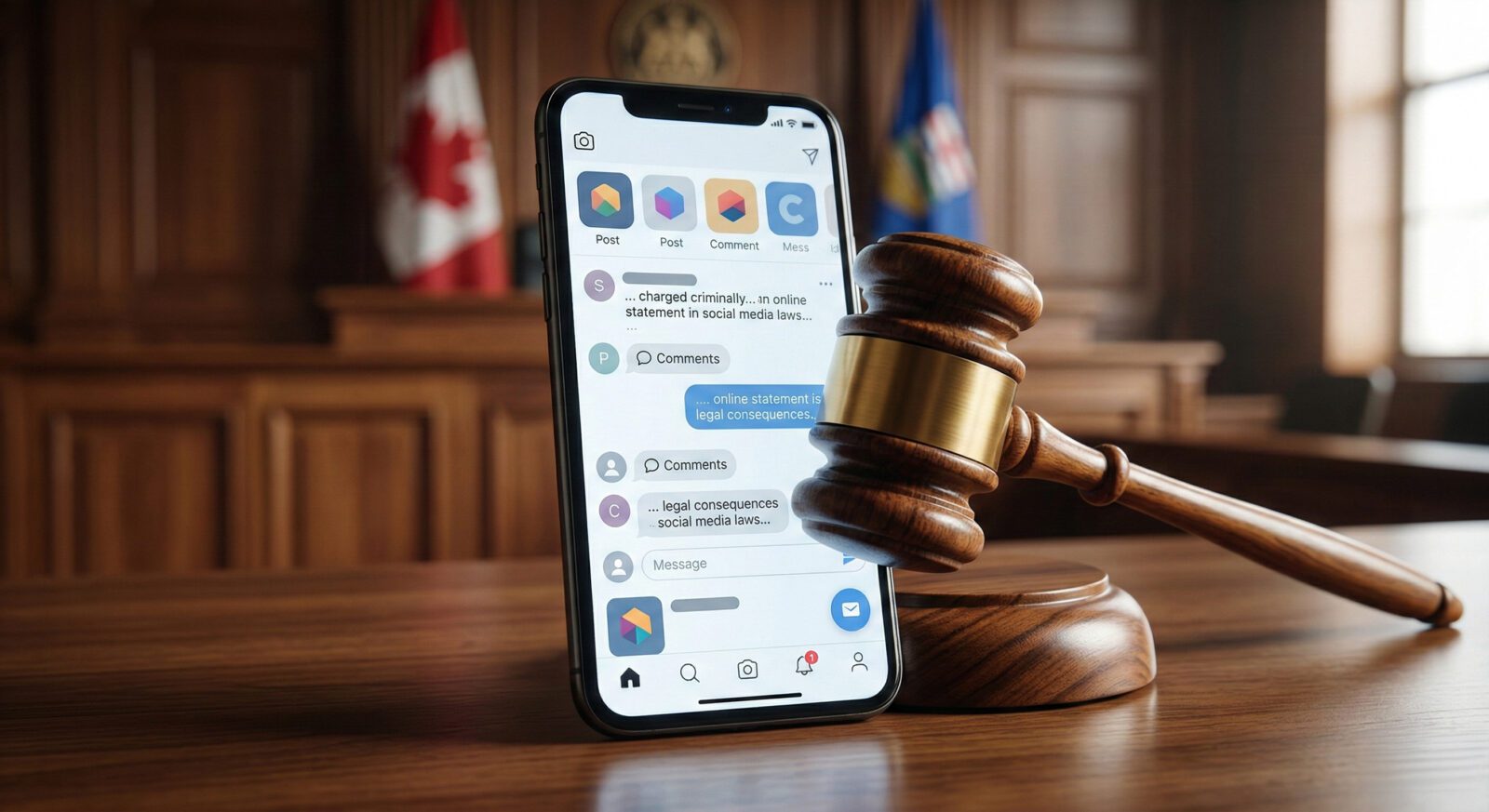
In the digital age, many Albertans mistakenly believe that the internet is a “wild west” where the rules of the physical world do not apply. However, there is no legal distinction between words spoken in person and those typed on a screen. At White & Jeet Law, we frequently encounter clients who have been charged criminally for social media activity based on a single post, comment, or direct message. If your online conduct meets the criteria for an offence, the consequences in Alberta can be life-altering.
How You Can Be Charged Criminally for Social Media Threats
The most common way individuals find themselves in legal trouble online is through Uttering Threats. Under Section 264.1 of the Criminal Code of Canada, it is an offence to knowingly utter or convey a threat to:
- Cause death or bodily harm to any person.
- Burn, destroy, or damage property.
- Kill, poison, or injure an animal or bird belonging to someone.
To secure a conviction, the prosecution must prove beyond a reasonable doubt that the accused intended for the words to be taken seriously, to instill fear, or to intimidate the victim. The Crown does not need to prove you actually intended to carry out the threat. For example, if you threaten someone online, it is not a valid defence that you lack access to a weapon or live in a different part of the city.
Criminal Harassment and Your Digital Footprint
Under Section 264(2)(b) of the Criminal Code of Canada, repeatedly messaging or communicating with an individual—directly or indirectly—can lead to being charged criminally for social media harassment if it causes that person to reasonably fear for their safety.
In determining whether you were reckless or intentional, the Court considers:
- The number of messages sent.
- The duration of the communication period.
- Whether the recipient was responding.
- The accused’s explanation and intent.
What to Do if You are Investigated
If you are contacted by the police regarding something you communicated online, do not attempt to explain yourself or delete the evidence. Anything you say can be used against you, and deleting posts can lead to additional charges like obstruction of justice.
If you are concerned about being charged criminally for social media posts, consider consulting with a criminal defence lawyer at White & Jeet Law who understands the nuances of digital evidence.