

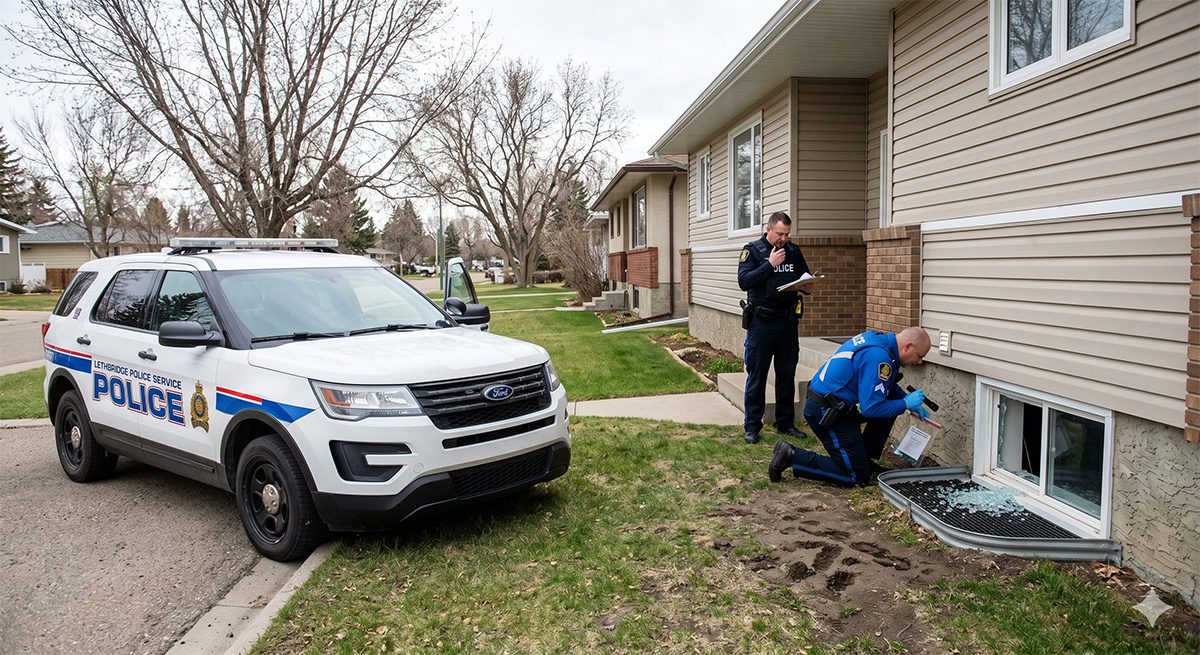
Legal Definition Under the Criminal Code
Break and enter is governed by section 348 of the Criminal Code of Canada. A person commits this offence when they:
- Break into a place (or enter without permission) and either
- Enter with the intent to commit an indictable offence (such as theft, assault, or mischief);
- Enter and commit an indictable offence.
Break and enter laws also cover breaking out of a place after either committing an indictable offence or entering the place with intent to commit an indictable offence.
Importantly, “breaking” does not necessarily mean smashing a door or window. It can include:
- Opening an unlocked door
- Entering through a partially open window
- Using a key without authorization
Types of Premises
1. Dwelling-house
- A place used as a residence
- Generally carries a higher punishment on conviction than a non-dwelling house
2. A place other than a dwelling house
- Generally treated as less serious than entering a dwelling house
Burden of Proof
For break and enter, the Crown prosecutor must prove beyond a reasonable doubt that the accused broke and entered or attempted to break and enter the place in question. If the Crown prosecutor provides evidence that the accused has done so, it is presumed that the accused intended to commit an indictable offence unless the accused proves otherwise. In other words, the accused must prove that he or she broke in, or attempted to break in, without the intent to commit an indictable offence.
Penalties and Sentencing in Alberta
Break and Enter (Dwelling-House)
- Maximum penalty: Life imprisonment
- Sentences vary widely depending on the circumstances of the offence
Break and Enter (Non-Dwelling)
- Maximum penalty: 10 years imprisonment
Common Defences
Lack of Intent
If the accused did not intend to commit an indictable offence at the time of entry, the charge may not be proven.
Mistaken Identity
Break and enter cases often rely on circumstantial evidence, which may be challenged.
Lawful Entry
If the accused had permission to enter, the charge may not be proven
Charter Violations
Unlawful arrests and searches can result in evidence being excluded.
When to Contact a Criminal Defence Lawyer
In Alberta, courts treat offences involving intrusion into a person’s home—especially where violence is involved—with the utmost seriousness.
If you are facing allegations related to break and enter in Alberta, it is essential to seek legal advice immediately. A criminal defence lawyer can:
- Analyze the specific facts of your case
- Challenge the Crown’s evidence
- Protect your constitutional rights
White & Jeet Law provides experienced and strategic criminal defence representation for individuals facing serious charges across Alberta.