
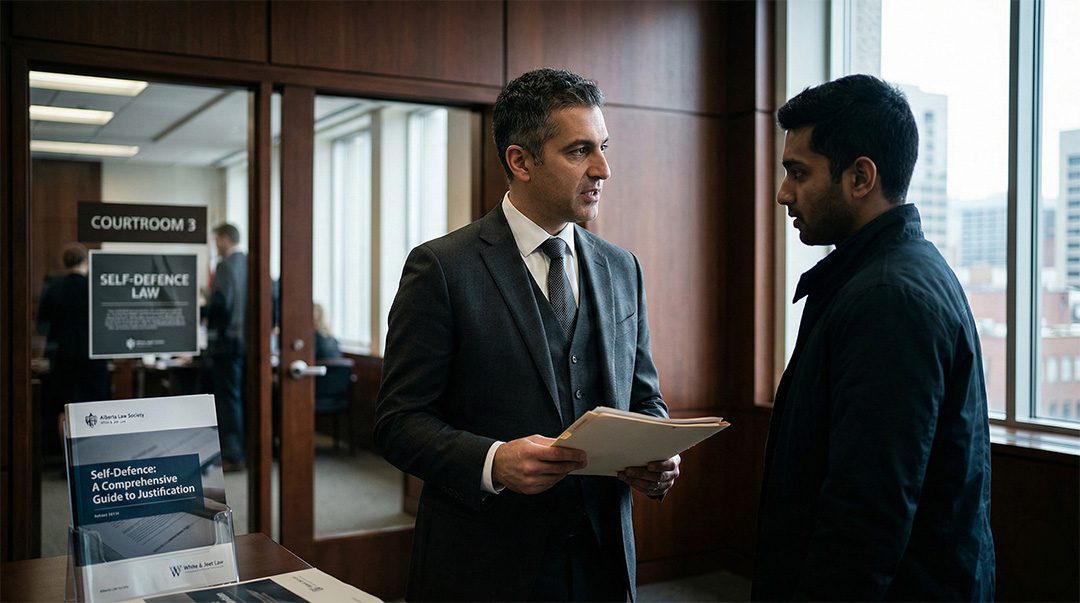
In the heat of a dangerous moment, your primary instinct is to protect yourself or your loved ones. However, once the immediate threat has passed, many Albertans find themselves facing a complex legal battle to prove that their actions were justified. In Canada, self-defence laws in Alberta are not an “automatic” right—it is a legal justification that must meet specific criteria under the Criminal Code of Canada.
At White & Jeet Law, we believe that every individual deserves a robust defence. Understanding how Alberta courts interpret these laws is the first step in protecting your future.
The 3 Critical Elements of Self-Defence Laws in Alberta
Pursuant to Section 34 of the Criminal Code of Canada, the following elements must be established in order to successfully claim self-defence:
- Reasonable Grounds: The accused individual must establish that he or she believed on reasonable grounds that force or a threat of force was being used against themselves or another person.
- Defensive Purpose: The accused individual must establish that their actions that constitute the offence were committed for the purpose of defending either themselves or someone else from that use or threat of force.
- Reasonableness: The accused individual must establish that his or her use of force was reasonable in the circumstances.
How Alberta Courts Determine Reasonableness
When assessing the reasonableness of the accused individual’s actions, the Alberta Courts will consider several non-exhaustive factors:
- The Nature of the Force or Threat of Force: This is context-specific and depends on the particular circumstances, such as whether a weapon was used or where the incident occurred.
- Imminence of Force: The Court considers whether the threat was immediate. For example, a threat to hit someone “right then and there” is treated differently than a threat to do so in the future.
- Availability of Other Means: The Court considers whether the force was inescapable or if the incident could have been avoided, such as by walking away from a verbal threat.
- The Accused’s Role and Physical Capabilities: Your actions are heavily scrutinized, and factors like the size, age, and gender of each party are weighed to determine a “reasonable” response.
- History and Weapons: This addresses the relationship and prior history of violence between the parties, as well as whether either party used or threatened to use a weapon.
- Proportionality: This factor is crucial. The accused must establish that their actions were proportional to the threat; for example, the use of a gun against an unarmed home intruder will likely be considered unproportional.
Please note that an accused individual is prohibited from raising self-defence if the person whom he or she used force against was acting lawfully, unless the accused believed on reasonable grounds that the other person was acting unlawfully.
What to Do if You Are Charged
Navigating self-defence laws in Alberta requires careful documentation. If you used force to defend yourself and are being questioned by police:
- Exercise your right to remain silent: Anything you say can be used against you, even if you believe you were clearly in the right.
- Contact a lawyer immediately: Self-defence cases are won on the details of the evidence.
- Document everything: As soon as possible, write down your recollection of events, identify witnesses, and preserve physical evidence like photos of your injuries.
Do you have questions about a specific incident or are you facing charges where self-defence may apply? Contact White & Jeet Law today for a confidential consultation.