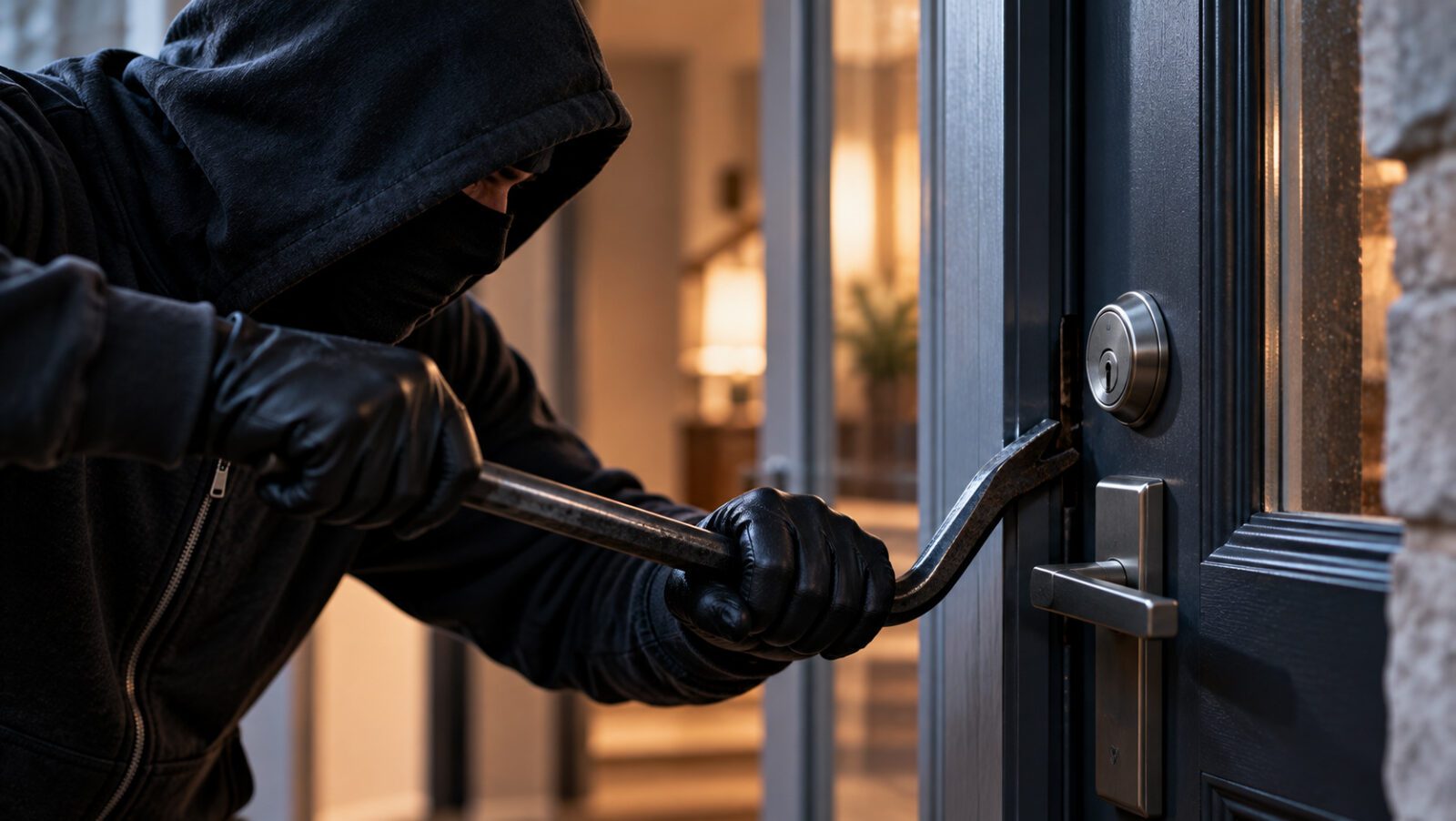
Facing a break and enter charge in Alberta is a highly stressful experience. It is a serious property offence that carries the potential for significant jail time depending on the circumstances. Understanding what the Crown Prosecutor must prove beyond a reasonable doubt is the first step in building a strong defence.
The Canadian Criminal Code: Section 348
Under Section 348 of the
Criminal Code of Canada, break and enter (often referred to as B&E) is committed when a person:
- Breaks and enters a place with the intent to commit an indictable offence;
- Breaks and enters a place and commits an indictable offence therein;
- Breaks out of a place after committing an indictable offence; or
- Breaks out of a place after entering the place with intent to commit an indictable offence.
Element 1: “Breaking”
Common law and the
Criminal Code define “breaking” as broader than smashing a window. It can include simply opening a closed door, picking a lock, or even gaining entry through an open window.
Element 2: “Entering”
Entry is complete as soon as any part of the person’s body or an instrument they are using is within the place. You do not need to be fully inside a building to be charged with entering.
Element 3: The Intent (Mens Rea)
This is often the most contested element in Alberta courts. The Crown prosecutor must prove that the accused committed an indictable offence or intended to commit an indictable offence (like theft or assault), depending on the specific charge. With regard to intention to commit an offence, section 348(2) of the
Criminal Code provides a presumption that, if you break and enter a place, it is presumed you intended to commit an indictable offence unless there is evidence to the contrary.
Penalties in Alberta
In Alberta, home invasions are treated with more severity than any other place that is allegedly broken into:
| Type of Premises |
Maximum Penalty under the Criminal Code |
| Dwelling House (Residential) |
Life Imprisonment |
| Non-Dwelling (Commercial, Sheds, etc.) |
10 Years Imprisonment |
How White & Jeet Law Can Help
Defending a B&E charge requires a meticulous review of the evidence. Were your Charter rights violated during the police investigation? Can the Crown prove identity if the evidence is purely circumstantial (like fingerprints on the outside of a window)? Is there a valid defence of “colour of right”? If you are facing these charges, contact the experienced criminal defence team at White & Jeet Law today.